
Colorado Wanted Lists Explained
No single Colorado page gathers every county warrant, state supervision notice, and federal fugitive case. The statewide public sources each do one job. The Colorado Bureau of Investigation maintains a Most Wanted Sex Offenders collection. CDOC posts parole absconders whose whereabouts are unknown. The U.S. Marshals Service can feature fugitives through its District of Colorado page or its national one. County sheriffs and police departments often keep their own wanted notices too. A wanted listing is law enforcement asking the public for help. A dated PDF can sit online long after an arrest. Warrant details may change too. So check the issue date. Check the issuing agency and the tip instructions on the official source. Then confirm current status with that agency before you share anything.
Never approach, follow, message, or confront anyone shown in a wanted notice. Send information through the official tip channel instead, and call 911 for any immediate emergency.
Official Colorado Fugitive Sources
These public pages are not interchangeable. Each agency decides who appears, what an entry means, and where a tip should go. Work from the source page itself, never from a copied photo or an old PDF floating in a search result.
| List | Who Runs It | What It Covers | Photo and Route |
|---|---|---|---|
| Most Wanted Sex Offenders | Colorado Bureau of Investigation | Dated public list entries issued through the state source. | PDF entries can include a photo and CBI tip phone and email. |
| CDOC Absconders | Colorado Department of Corrections | Parolees whose whereabouts are unknown under CDOC's stated definition. | Official information page and CDOC tip route; do not contact the person. |
| USMS District of Colorado | U.S. Marshals Service | District office and task-force information; profiled fugitives may also appear on the national site. | Use the tip method shown on the current official profile. |
| County or city agency notices | Sheriff or police agency | Local requests that may not appear on state or federal lists. | Route by county through the Colorado County Directory, then verify on the agency's official page. |
The CBI's July 2025 PDF is a dated snapshot, not a live warrant index. Someone on it may already have been found. Or the warrant may have changed since publication. CDOC's absconder page deals with parole supervision, not a fresh arrest. The USMS district page lists no profiled fugitives. The national USMS page can still carry Colorado-connected profiles. A blank local page never proves that no warrant exists.
What a Wanted Notice Shows
Treat each field as a clue about the issuing agency's record. It is not a final court result. The CBI list can show a subject's name and date of birth. Physical description and conviction information can appear too. It may also list the issuing agency, a photo, and an issue date. A CDOC absconder notice flags a parole status concern and gives a tip path. USMS profiles may add federal identifiers plus the agency contact listed on the profile itself.
| Notice Field | How to Read It |
|---|---|
| Name and photo | Compare only on the official page. A photo can be old or misidentified. |
| Issuing agency | The office that can confirm whether the notice is still active. |
| Offense or supervision note | The reason for the notice as described by that agency, not a verdict by itself. |
| Issue or update date | The date of the notice. It does not guarantee a current status. |
| Tip route | The official phone, email, or submission method for information. |
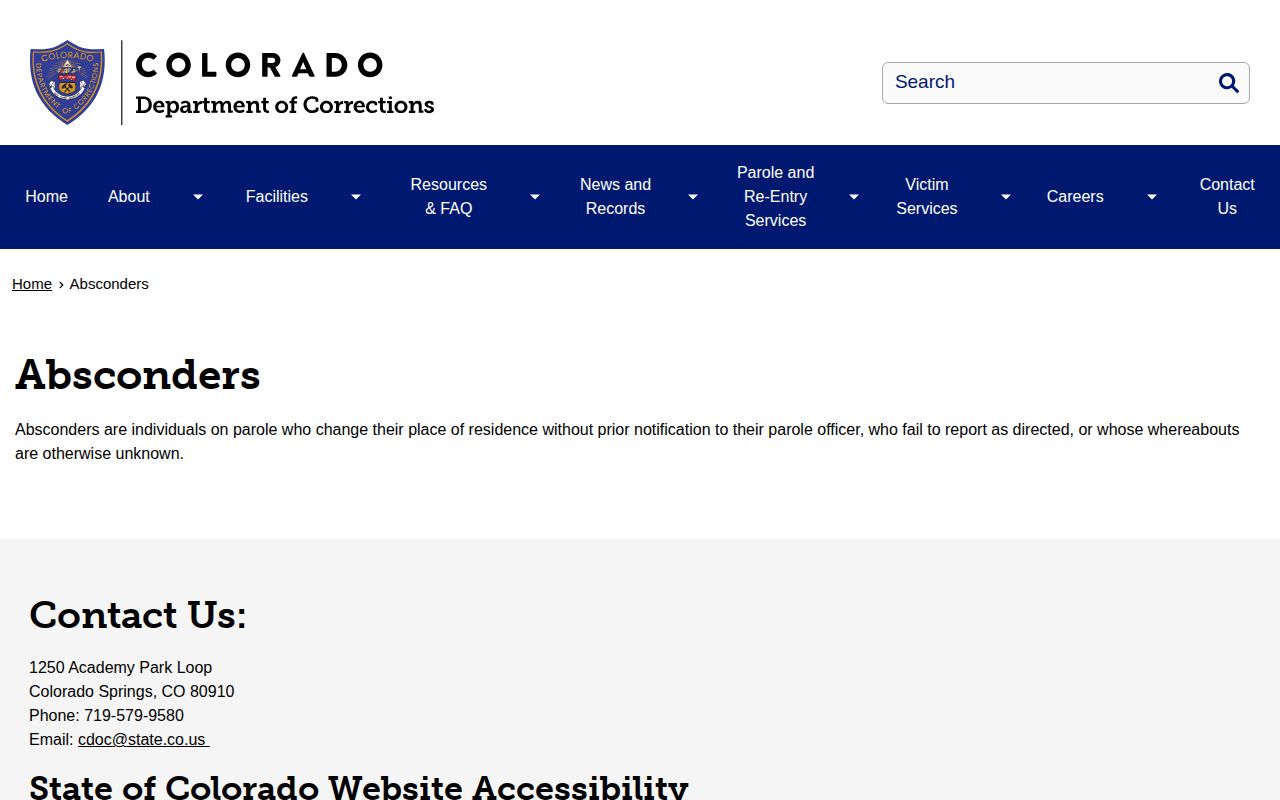
CDOC defines an absconder as a parolee who moves without notice. The parolee may stop reporting. Location may simply be unknown. That label is a supervision status rather than a new crime or a county booking. The CDOC page spells out the term and points the public to the department's own tip route.
Use the live page for current agency instructions. A saved copy is no proof of present status.
How to Read a Colorado Wanted List
Start at the agency homepage and follow its current wanted-list link. That habit steers you away from stale files and look-alike third-party pages. CBI's list runs on dated PDF entries. The CDOC page works as an ongoing information route. The USMS district page is an office and task-force resource. It is not always a current roster of subjects.
- Open the agency’s current official page. Check the title, update date, and whether the page links to a dated PDF or profile.
- Read the issuing agency and the notice’s own status details. Do not assume a statewide label means the person is held in a Colorado county jail.
- Use the exact official tip channel shown. For an emergency, call 911; do not send a tip through a social-media comment.
- If the notice names a county case, check the relevant court docket for case events, then ask the issuing agency whether the wanted notice remains active.
- Do not repost a face image or identify someone from resemblance alone. Let law enforcement assess the information.
Colorado's wanted lists put their tip channels right on the page. The CBI list names 303-239-5732 as its tip line and lists CDPS_CBI_FugitiveTips@state.co.us in its dated materials. Since contact details can shift, check the live CBI page first. CDOC takes absconder tips at 1-866-873-6305, but neither number serves as a way to check every Colorado warrant.
Checking a Specific Colorado Warrant
A most-wanted page is curated. A warrant check is different. It digs into one case, and the trail can run through a county court, a municipal court, a sheriff, or the police agency that asked for the warrant. Colorado's public docket search helps with hearings and case numbers. Beyond that, the state offers no single public warrant-status database. A stale docket entry or an empty search result proves nothing either way about whether a warrant stands or has been cleared.
- Write down the person’s full name, likely county, court, and case number if available. Use the public docket to locate the court case and its recent events.
- Contact the clerk for the court tied to the case or the law-enforcement agency that would execute the warrant. Ask what records or status details the office can confirm.
- If a warrant may exist for you, contact a lawyer or the court to learn the safe process for addressing it. Do not ignore the notice or try to avoid law enforcement.
- After a court appearance or resolution, obtain the actual order or disposition and confirm that the issuing agency’s record was updated.
A warrant is court paperwork that authorizes a defined action. The label alone tells you little. It does not explain why it was issued or whether it still stands. A docket can list a warrant event without recording its later recall or service. For a firm answer, the clerk or the issuing agency is the confirmation point.
The Colorado Judicial Branch Docket Search lets you filter by district, county, courthouse, court type, date range, case number, or party name. The interface asks for at least one filter and a date range. Only then does it return anything. Docket entries are not full copies of every order. Getting the signed document may mean going through the court's records process.
Sending a Colorado Fugitive Tip
When you send a fugitive tip, stick to facts that can be checked. Skip public posts and private details. Threats have no place in a tip either. If the notice allows an anonymous route, use it, and expect a possible request for a callback detail without any promise of anonymity or a reward beyond what the agency states.
- Open the current official CBI, CDOC, or USMS notice and confirm it names the person or case you mean.
- Use the listed phone, email, or official submission form. Include the notice name or case detail and what you personally observed.
- Do not travel to the person’s home or work, attempt contact, or share a location in a public comment.
- For immediate danger, call 911. For a nonurgent lead, use the notice’s tip channel.
CBI posts a phone number and a tip email right on its list. CDOC runs its own line for parole absconder tips. No single statewide Crime Stoppers program spans every agency here. Read the terms on each tip page before sending anything. Reward and anonymity promises vary by office.
Third-party copies of wanted notices can go stale. Confirm a notice's status with the agency that issued it, and leave any contact or enforcement work to trained officers.
County Wanted Notices in Colorado
Local sheriffs and city police often post wanted notices of their own. CBI and CDOC never mirror those local lists. The county directory links to each locality's busted-mugshots site, which gathers official local sources and request paths. Start from the sheriff or police site itself, since one city may run its own department while its bookings land in a county or contract jail.
Three records get confused easily. A wanted notice asks for help finding someone. A jail roster shows who is in custody now. A court docket tracks case events. The same person might show up in any combination of these, or in none. Someone released from jail can still be wanted in a separate case. An old notice may name a person already located.
For an arrest or booking record, return to the county agency that took custody. The Colorado statewide record and roster overview shows how county feeds, released records, and court dispositions fit together.