
Are Colorado Mugshots Public Records?
Usually, yes, when a Colorado criminal justice agency holds it, because a booking photo counts as a criminal justice record you can request. C.R.S. § 24-72-302 calls a photograph "basic identification information." Section 24-72-303 opens records of official actions to inspection, subject to law. Nothing forces an agency to post photos on a live roster, though. A custodian can point to the CCJRA, another statute, a court order, juvenile protections, redaction rules, or an investigatory exception when answering a specific request.
Who holds it matters too. A sheriff keeps the jail booking photo. A police department keeps its own arrest image. Courts hold filings and exhibits, while CDOC may display an offender identification photo after a state-corrections commitment. A copy on a private page is different. It is not the agency's current record. A denial should cite the rule the custodian applied, not a missing search result.
A mugshot marks an intake event and nothing more. For what a court actually decided, pull the case docket.
Colorado's Booking-Photo Statute
Colorado's anti-pay-to-remove rule lives at C.R.S. § 24-72-305.5(2). The law is narrow. It is unlawful to obtain a booking photograph knowing it will appear in a publication or on a website where removal or deletion requires payment or another exchange for pecuniary gain. Requesters must sign an affirmation first. That statement goes to the criminal justice custodian, and one signed form can cover multiple requests for a period the custodian sets, up to one year.
Violate the rule, or affirm falsely, and it becomes an unclassified misdemeanor with a fine up to $1,000. The statute defines a booking photo precisely. It is an image taken by a criminal justice agency at arrest or detention, before conviction. Two neighbors in the code cause confusion. Section 24-72-305.5(1) covers direct solicitation using criminal justice records, a different subject. Section 24-72-305.6 is often mislabeled. It is not the anti-removal-fee provision.
In plain terms, the law regulates the requester's known plan and the removal-fee condition. It does not declare all booking photos secret. It orders no site-wide deletions. Nor does it create a universal right to remove any image from the internet. Anyone asking for a photo should describe the record and its lawful intended use accurately on the custodian's form.
For exact language and later amendments, the official statute page controls, and a court order or the current text governs any particular case. A summary cannot replace it. Colorado's official CCJRA and booking-photo provisions situate the photo rule inside the wider criminal-record access framework.
How Colorado's Rule Took Shape
HB14-1047 became Chapter 115 of the 2014 Session Laws after its April 11, 2014 approval. It took effect September 1, 2014, for offenses committed on or after that date. Early drafts and public summaries promised more. They described free removal for people never charged, for dismissed charges, and for acquittals. The enacted law chose a different path. It created a requester affirmation plus the misdemeanor rule now found in § 24-72-305.5(2).
That gap explains why online summaries conflict. "Colorado banned mugshots" is far too broad. "Free removal for everyone" also overstates the statute. Related paths exist, but they stay distinct. A favorable case outcome, a signed seal order, an agency correction, and a publisher's voluntary policy each work differently.
Courts have weighed in on the older subsection. The Tenth Circuit's 1994 decision in Lanphere & Urbaniak v. Colorado, 21 F.3d 1508, upheld a direct-solicitation restriction in subsection (1). That ruling predates the 2014 booking-photo rule. It does not settle every subsection (2) question. The 2025-2026 SMB Advertising v. City of Boulder briefing touches criminal justice records and body-worn-camera material, but no reported appellate holding has invalidated or comprehensively interpreted the 2014 photo rule.
HB14-1047's final act documents the shift from proposal to enacted language, including the effective date and the affirmation framework.
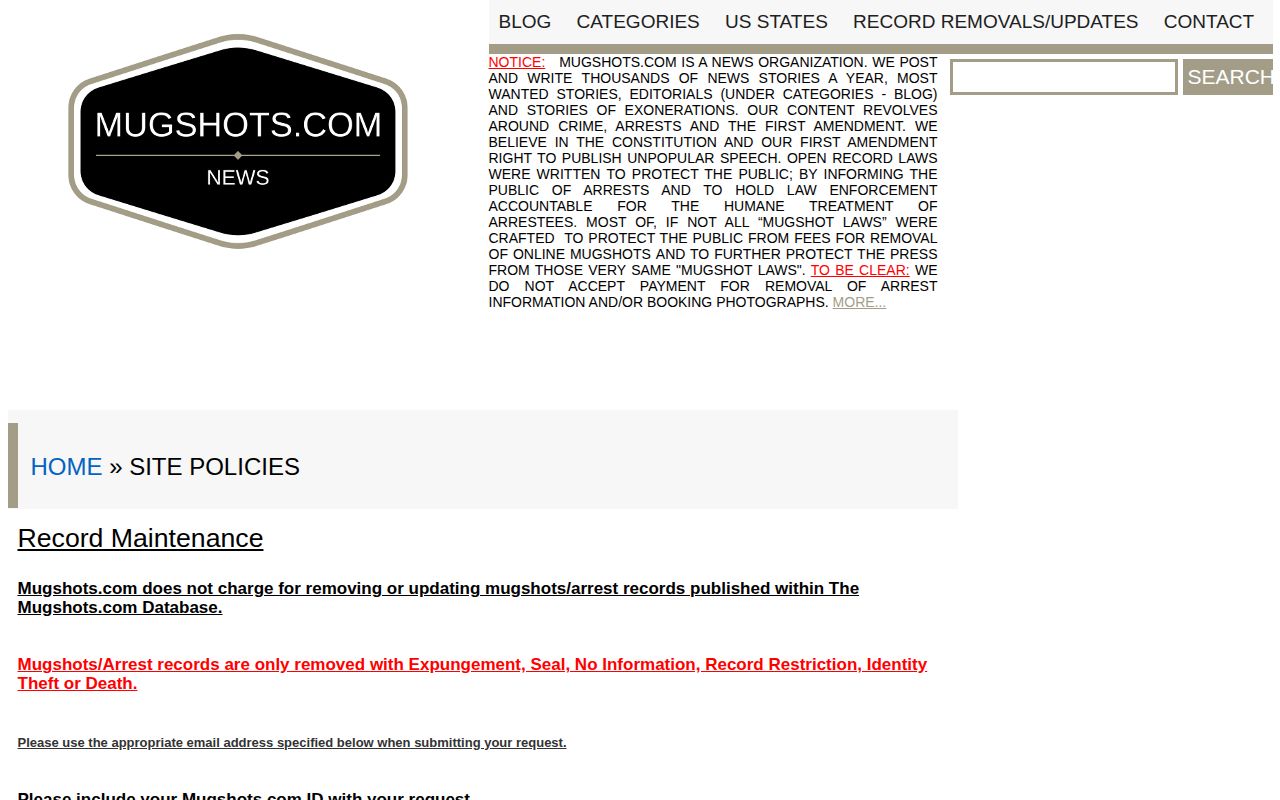
A publisher's policy page documents its own removal route. It is neither Colorado's statute text nor a promise that every record comes down.
What You Can Still Look Up
A missing roster photo is not the end. The county or arresting agency may still hold the booking record. Try the custodian first. Use its official search, daily report, or records unit, then check the Colorado Judicial Branch docket for hearings and disposition. State corrections adds another layer. CDOC's Offender Search can show a separate offender profile and photo after a person enters the system, and that image may differ from the county booking photo.
- Find the county or agency that took custody. The County Directory routes to local systems.
- Read the roster label: current inmate, recent booking, release report, or intake list each covers a different time window.
- Ask the records custodian for the booking sheet and photo, naming the person, date range, and record sought.
- Use the state court docket and request the judgment or disposition from the court when the result view is incomplete.
- Use CDOC only for a state corrections profile, not as a substitute for a county arrest search.
Copying is not free under CCJRA § 24-72-306. Agencies may charge reasonable actual costs for search, retrieval, manipulation, redaction, and copying work. Paper copies are capped at 25 cents a page. Photographs and nonstandard formats cost actual costs instead. Local fee schedules differ, and the amount of staff work shapes the final bill. Ask about the charge and the process before you expect a response.
Juvenile, Sealed, and Held Records
Juvenile photos are a different animal. Adult roster rules do not apply to them. Colorado's Children's Code, court rules, and any expungement order control what gets released. Once a juvenile record is expunged, the Judicial Branch treats it as closed. Even basic identifying information stays away from the public. A private page calling someone a juvenile deserves skepticism. Hold that view unless a current official basis supports it.
Other limits apply. Active investigations can block access. Court seals, protective orders, statutory confidentiality, and details requiring redaction can block it too. Sealing is not an acquittal, and an acquittal does not erase every public copy. Ask why. A requester can ask the custodian to state the legal basis for withholding. The same requester can seek release of any nonexempt portion that can be separated.
The Judicial Branch's current seal-my-case page links to forms. Those forms cover adult convictions, no-charge arrests, nonconvictions, municipal cases, and juvenile matters. Start there. It beats guessing. An old form number copied into a web post is a weak substitute.
That page sorts routes by outcome for good reason. A no-charge arrest and an adult conviction use different packets.
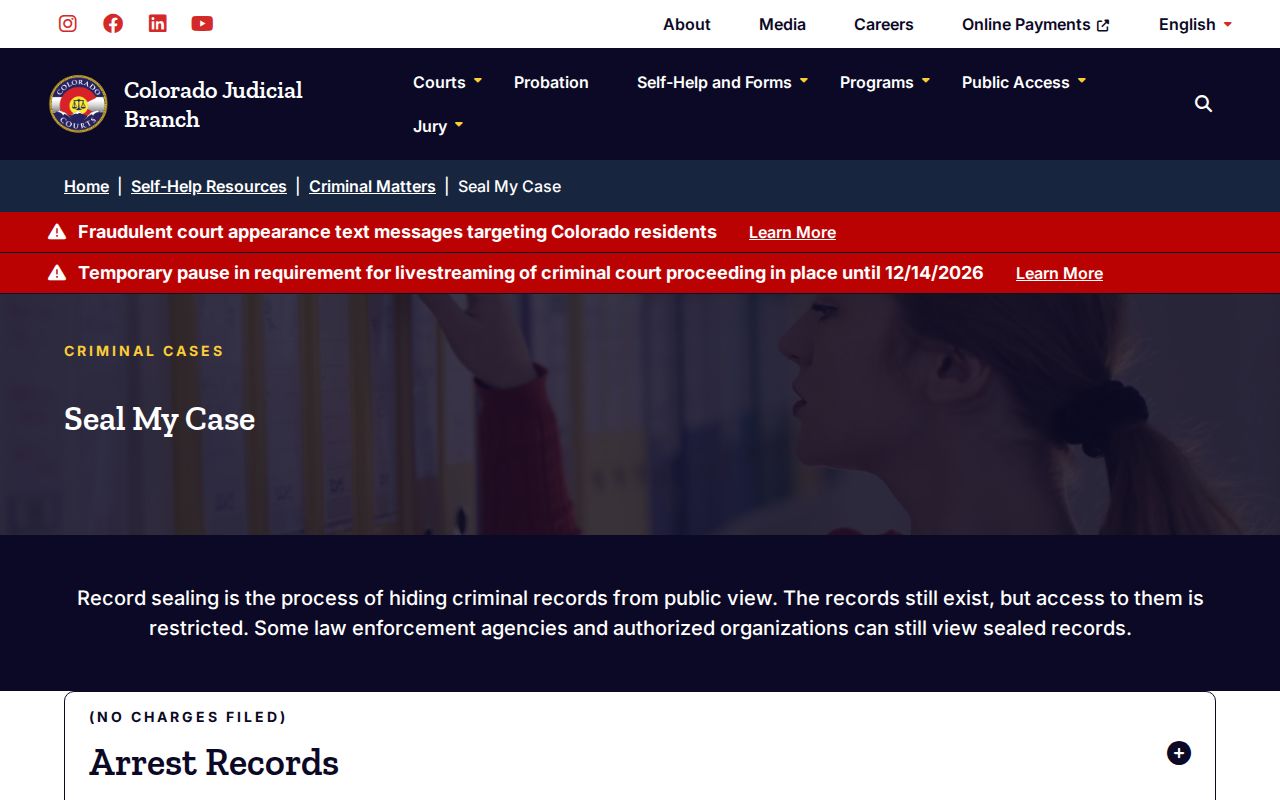
Filing takes the current court forms and a walk through the eligibility steps. A favorable outcome alone does not establish that a record has been sealed.
Colorado Sealing and Expungement Routes
Colorado splits sealing into several lanes. Arrests without charges and nonconvictions get a route of their own. Adult convictions, municipal cases, and juvenile expungement get others. Wait times track the offense and outcome. The current adult JDF611 guide breaks these into four categories. They run one, two, three, and five years. Each band is subject to exclusions, restitution, supervision, and other statutory conditions. No time band guarantees eligibility. Trust the current form and statute, not an older summary.
Once the court signs a sealing or expungement order, the official custodian must obey it. The governing law binds the custodian as well. That can stop an agency from releasing the photo in an ordinary response. It cannot reach older publications. A news story or social post published earlier stays put. So does a screenshot, archived newspaper page, or third-party copy. Send the signed order to each custodian or publisher holding a copy. Then address a lingering search result after the source changes.
The state's sealed-case search has limits. It runs one case at a time. It does not confirm every petition seal, automatic nonconviction seal, or juvenile matter. Denver County Court runs its own procedures. A missing result is no proof that no case existed.
The state form sets waiting periods and flags convictions that cannot be sealed. The statute and the court's review settle it.
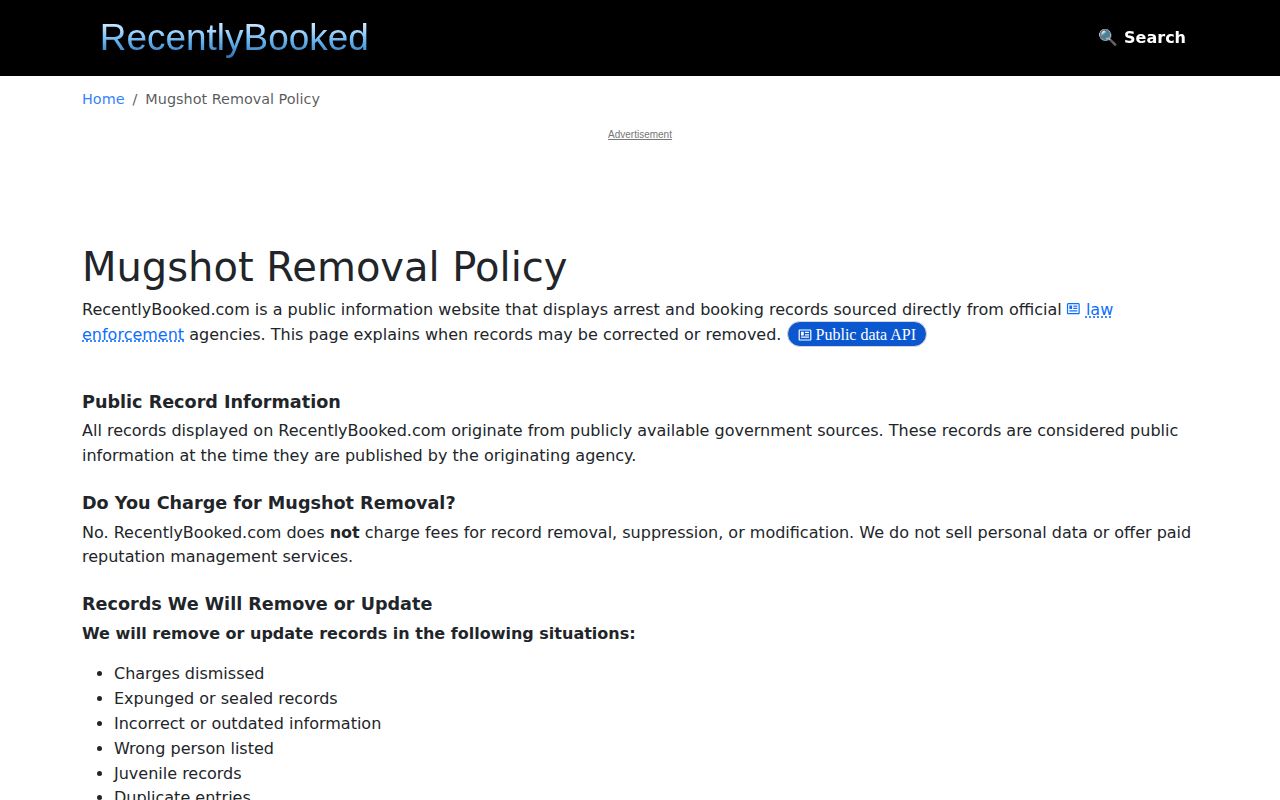
A publisher's removal policy is voluntary. It stands apart from what a court order legally does to the official record.
Free Publisher Correction Requests
Colorado law offers no universal removal process. Some publishers fill that gap with their own no-fee documentation routes. RecentlyBooked says it never charges for removal, suppression, or modification. Its policy covers review of incorrect records, dismissed charges, sealed or expunged records, and other legally restricted material, with documents required. Source update timing differs by county, it warns, and search-engine copies can linger. An accurate current public record earns no promised removal.
Mugshots.com states it does not accept payment for removing arrest information or booking photos. Its policy allows review of court-ordered seals, expungements, identity-theft proof, death, and favorable dispositions for a free update or removal, with legible documentation. It promises no completion time. Busted Newspaper takes a form-based approach. Its form asks for case details and supporting documents covering outcomes like dismissal, seal, expungement, or a not-guilty finding. No universal deadline appears on it.
Arrests.org's Colorado interface posts no verifiable free-removal policy. Mugshots.zone lists no Colorado state index, and its removal form's terms go unstated. Never assume a submission is free or will work when the publisher has not said so. Ask the publisher directly. Keep the official case record as proof of the outcome.
Mugshots.com's published policy spells out its documentation review. It also repeats that no payment is accepted for removal. The policy page displays those terms, not search results.
Use the publisher's own correction link rather than posting private court papers in a public comment. Requests sent that way tend to move faster. The publisher's site carries the correction path, and the policy page spells out its exact criteria. Read that policy before you submit.
A form link alone proves nothing about eligibility, cost, or deadlines. Read the current terms before you send anything.
Old Search Results and Scam Claims
Search engines do not always update right away. A page can vanish from a government site. Its title, snippet, thumbnail, or URL may still linger in results. Fix the record first. Get the correct disposition or court order before you approach anyone else. Then ask the agency or publisher that controls the source copy to correct what it shows. Suppose the source page changed but the stale result stays. Then use the search engine's outdated-content or legal-removal process. Removing a search result leaves the court record itself untouched. Other copies may still exist elsewhere on the web.
Watch out for paid removal promises. No service can honestly guarantee that every copy of a booking photo will disappear. That holds true even when a fee is paid. Colorado law speaks directly to this problem. A statute targets sites that obtain a booking photo and then charge for its deletion. There is no universal paid path worth trusting here, and no paid removal provider earns a recommendation. Even a free takedown request to a publisher has limits. It is no substitute for correcting the official court or agency record.
For one specific case, work in order. Start with the current court order. Contact the originating agency, then the publisher hosting the copy, then the search engine. Keep each request factual, and ask for written confirmation of whatever action gets taken.