
Colorado Busted Mugshots and Records
What is a mugshot? It is the photo a criminal justice agency takes when someone is booked into custody. The booking record is the paperwork created at that same moment. Those two items do not always sit in the same office. City police often keep the incident report. The sheriff or jail holds the sheet and photo. The court tracks the case itself. If the person later goes to state corrections, CDOC keeps a separate profile. That profile may include an identification photo.
That split shapes every Colorado search. Someone arrested in one city might be booked at a county jail. It could also be a contract facility or another receiving jail. The arrest location is a clue, nothing more. Begin with the agency named in an arrest notice or court filing. No live roster hit? Ask the intake agency for the booking record directly. A roster has limits, though. It only shows current or recent custody, not a person's full arrest history.
What a jail lists at booking is only the opening entry in a case file.
Colorado Mugshot Law in Plain English
Colorado's Criminal Justice Records Act, the CCJRA, controls access to records. Those records sit with police, sheriffs, jails, and similar agencies. The statute runs from C.R.S. §§ 24-72-302 through 24-72-309. It covers definitions, access, denials, costs, and ways to challenge record accuracy. The act treats a person's photo as basic identifying information. Even so, other laws can limit release. Court orders, juvenile rules, privacy concerns, or an active probe can too. CORA governs public records broadly. It cannot replace the CCJRA for arrest and booking requests.
A separate rule targets booking photos directly. C.R.S. § 24-72-305.5(2) bars knowingly obtaining a booking photo for a publication or website. The bar applies when removal or deletion requires payment or another exchange for gain. Requesters must sign a statutory affirmation. A knowing violation, or a false affirmation, is an unclassified misdemeanor. The fine can reach $1,000. Note the narrow aim here. The law restricts a requester's intended use. It does not ban public booking photos outright. It also orders no takedown of existing online copies.
The provision came from HB14-1047, which became Chapter 115 of the 2014 Session Laws. It took effect September 1, 2014 for offenses on or after that date. Early bill summaries pitched a broader free-removal model. But the enacted text settled on the affirmation and the anti-removal-fee rule. The older *Lanphere & Urbaniak v. Colorado* ruling dealt with direct solicitation under a different subsection and predates the 2014 provision. The Colorado mugshot-law analysis walks through the statute. It also covers the court history and correction routes in greater depth.
Juvenile material sits outside this framework. It follows the Children's Code and any court orders in play. Investigatory files, sealed cases, and protected details may be withheld or redacted too. A public roster, then, is never a promise that every name or photo appears online.
What a Colorado Booking Record Shows
Forms differ county to county. Statewide jail law describes a daily jail record with identifying and custody details. A person-specific CCJRA request can seek the booking sheet. It can also seek the photo if that photo is releasable. CDOC profiles carry their own fields. They cover only people in state corrections data, not every county arrest.
| Field | What It Shows |
|---|---|
| Name and date of birth | The identity recorded at intake; spelling may differ from a current legal name. |
| Booking or entry date | When the person entered the jail record, not necessarily the time of arrest. |
| Charge or offense code | The charge and jurisdiction recorded at booking. It is not a court finding. |
| Bond or release status | A custody or release detail as recorded by the jail. Terms can change. |
| Sentence and release date | When applicable, the sentence or release event noted in the jail record. |
| Booking photo | An image held by the agency, subject to CCJRA limits and any statutory affirmation. |
| CDOC profile details | Corrections number, descriptors, photo, convictions, and parole, release, or discharge dates where shown. |
Don't assume counties publish every field online. Boulder posts daily booking and release information with no public photo. Weld's arrest lookup shows booking number, arresting agency, date of birth, charges, bail, and VINE information. Again, no photos. When a web view skips a field, ask the custodian for the record itself.
Requesting Colorado Booking Records
The CCJRA is the right tool for a booking sheet, arrest entry, or booking photograph. No single statewide form exists. Fees and response times vary too. Each local custodian sets its own intake process. It also applies the law to the specific record. The statute allows reasonable actual costs for search, retrieval, manipulation, redaction, and copying. Ordinary paper copies are capped at 25 cents per page. Photographs and nonstandard copies may run at actual cost.
- Identify the likely booking or arresting agency. Use the Colorado County Directory to route to the county site and its records instructions.
- Give the person’s full name, date of birth if known, approximate booking date, and case or booking number if available.
- Name the record precisely, such as the booking sheet, booking photograph, charge entry, or release record. Ask which CCJRA process and fee schedule applies.
- Ask for the statutory basis for any denial and for any nonexempt part that can be released separately.
- Check the court docket and disposition after the arrest record arrives. If a record was sealed or expunged, provide the signed order to the custodian.
Start CDOC requests with the department's own records route. Include the DOC number, the person's name, and date of birth if known. Also state the record type, the facility or supervision unit, and the date range. Asking for a CDOC identification photo differs from asking the county for its photo. The county keeps its own original booking photo. Neither request creates a statewide photo database.
No single response clock or retention term covers every county booking photo in Colorado. Each agency's current schedule, litigation holds, and record series control. Under § 24-72-307, the CCJRA lets a requester challenge a record's accuracy or completeness.
Colorado Sealing and Record Retention
Colorado treats sealing as several routes, not one. Arrests without charges and nonconvictions have their own path. Eligible adult convictions, municipal cases, and juvenile expungement each have their own path too. The right form depends on the case result. The Judicial Branch's seal-my-case hub links to the current packets. Adult conviction waiting periods vary by offense class and other conditions. The current JDF611 guide lists one, two, three, and five-year categories. Those ranges still leave many offenses out. Juvenile expungement runs on its own forms described in JDF301.
A dismissal or acquittal does not wipe records by itself. A signed sealing or expungement order changes what the official custodian may disclose. It does not erase old news stories, search snippets, or reposts. Hand the order to the agency and then to the publisher holding the copy. If a search result lingers after its source changes, use the search engine's outdated-content route.
No single statewide rule keeps every county booking photo online for one fixed period. Agency schedules and custody systems differ. Colorado's general records guidance says CORA sets no universal retention period. Title 17 requires jail keepers to maintain specified daily jail information. But it does not require an online photo gallery. An older sheriff schedule lists distinct periods for some felony, misdemeanor, and jail incident records. It sets no statewide photo term either.
A roster can drop a name. The booking record may still exist. The reverse happens too. A web page can stay online after the agency stops showing it. Check both questions with the records custodian.
How to Find Colorado Busted Mugshots
Search by custody layer and record date. A just-booked person may surface in a county feed. A current inmate search shows who is still held, but after release the name can vanish from the roster even though the agency keeps the booking record. A state-prison sentence moves the lookup to CDOC. A court docket settles the case result.
- Start with the county where the person was booked, not only the city where the arrest occurred. Cross-county arrests and contract jail space can change the receiving agency.
- Check the county sheriff or jail’s official roster, daily report, weekly intake page, or records contact. Read the page label to learn whether it is current custody, a release list, or a recent booking window.
- If the person was sentenced to state corrections, search the CDOC Offender Search by DOC number or name. A CDOC photo is an offender profile image, not necessarily the county booking photo.
- Search the Colorado Judicial Branch docket by county, case number, party name, or date range to follow hearings and disposition.
- If the online sources do not show the record, ask the county or arresting agency for the booking sheet and photo under the CCJRA.
Search fields and photo policies differ from county to county. Archuleta County shows one workable model. Its official weekly-intake page posts rolling PDF reports that include booking photos. Each report carries the date, the charge, and the arresting agency. The bond amount appears too. A name on the list does not mean the person is still in custody.
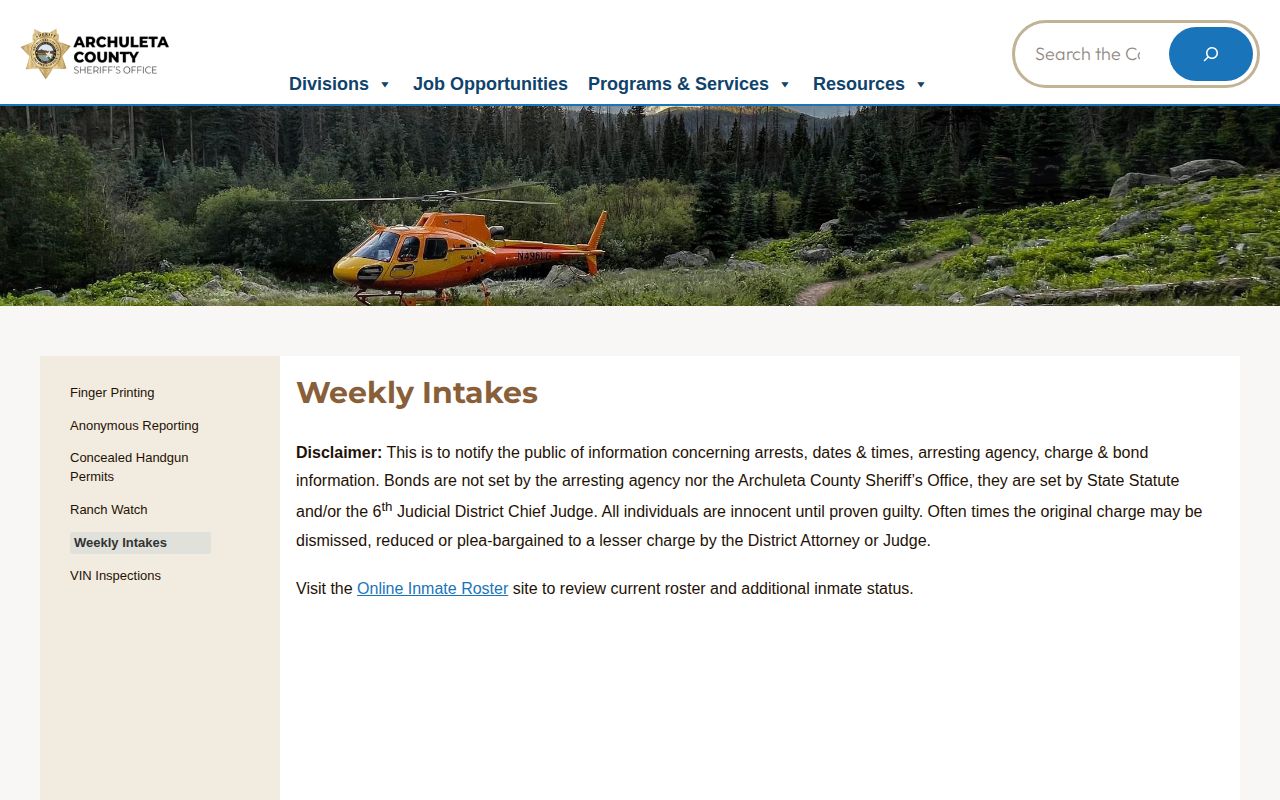
The photo stays with the county source. Use the dated report to pin down the right agency before you chase a full arrest record.
Colorado County Roster and Feed Types
Colorado runs no single statewide jail photo database. Counties go their own way. Official products range from photo-bearing inmate pages to text-only reports, and some counties post no roster at all, so the table offers starting points rather than a live feed of statewide arrests.
| County and official product | What the public view covers | Photo status |
|---|---|---|
| Archuleta JailTracker and weekly intakes | Current status search plus a rolling weekly intake report with charges, bond, and arresting agency. | Weekly PDF includes booking photos. |
| Bent inmate information | Current and historical arrest search with date controls and month/year reports. | Photos appear; the county notes lag or outages can occur. |
| Jefferson inmate lookup | Active custody search, with a detail view. | Photo may appear in an individual profile. |
| Teller Tiger Roster | Active, booked last 72 hours, and released last 72 hours. | Photo appears in a person detail view. |
| Fremont jail intakes | Chronological arrest and intake posts, which may include people later released. | Photo-bearing posts; not a current-custody roster. |
| Boulder daily reports | Current inmates, daily bookings, releases, population, and historical statistics. | No public booking photo; records request needed. |
| Mesa Booking Summary | Reports for the preceding 24 hours with selectable dates, observed for roughly 30 days. | Text fields, no public photo. |
| Weld Daily Arrests and Daily Released | Name or date search, with arrest and release dates separated. | No public photo field. |
| Larimer inmate search, bookings, releases | Current custody plus three-day booking and release reports. | No public booking photo in these views. |
| San Miguel activity logs | Monday-through-Thursday current lists and weekly booking summaries. | Text PDF reports without booking photos. |
Arapahoe publishes Charges and Bonds, Denver runs an Inmate Search, and Douglas offers a New World Inmate Inquiry. Eagle has a Booking Search. El Paso posts an inmate search, Garfield lists current inmates, Gunnison keeps daily rosters, and Pueblo offers arrest summaries. Adams lists an official inmate-search starting page, but no photos. Even a text-only lookup can confirm custody. Plenty of counties publish no roster online. That group includes Alamosa, Baca, Chaffee, Cheyenne, Clear Creek, Conejos, Costilla, Crowley, Delta, Dolores, Gilpin, Grand, Hinsdale, and Huerfano. Jackson, Kiowa, Lake, Mineral, Montezuma, Otero, Park, Phillips, Pitkin, Prowers, Rio Blanco, Rio Grande, Routt, Saguache, San Juan, Sedgwick, Summit, Washington, and Yuma round it out. A quiet site is not proof of nothing. Calling the jail answers a custody question fast. A person-specific records request, a receiving jail, or the court docket can also fill the gap. Teller County takes a different approach. Its Tiger Roster lays out three time windows. Visitors can filter for active inmates, those booked within 72 hours, and those released within 72 hours. Those windows shape the display only, not the retention of the underlying record.
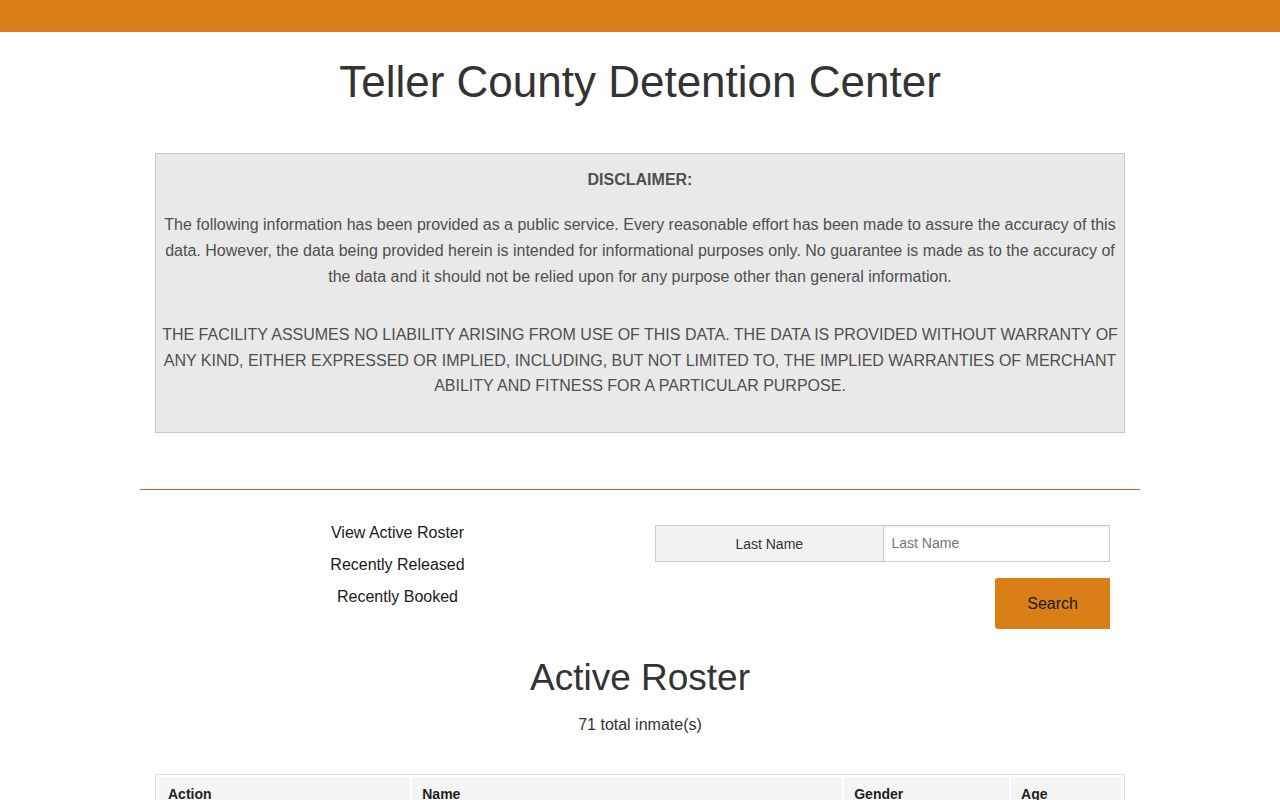
Check the roster tab before you assume anything. A name under one tab may be a current inmate, and under another, an already-released one. Boulder County’s daily booking and listing dashboard shows how a strong official feed works, even without photos. It splits its data into current inmates, daily bookings, daily releases, and statistics. It sends photo requests to the Records Division.
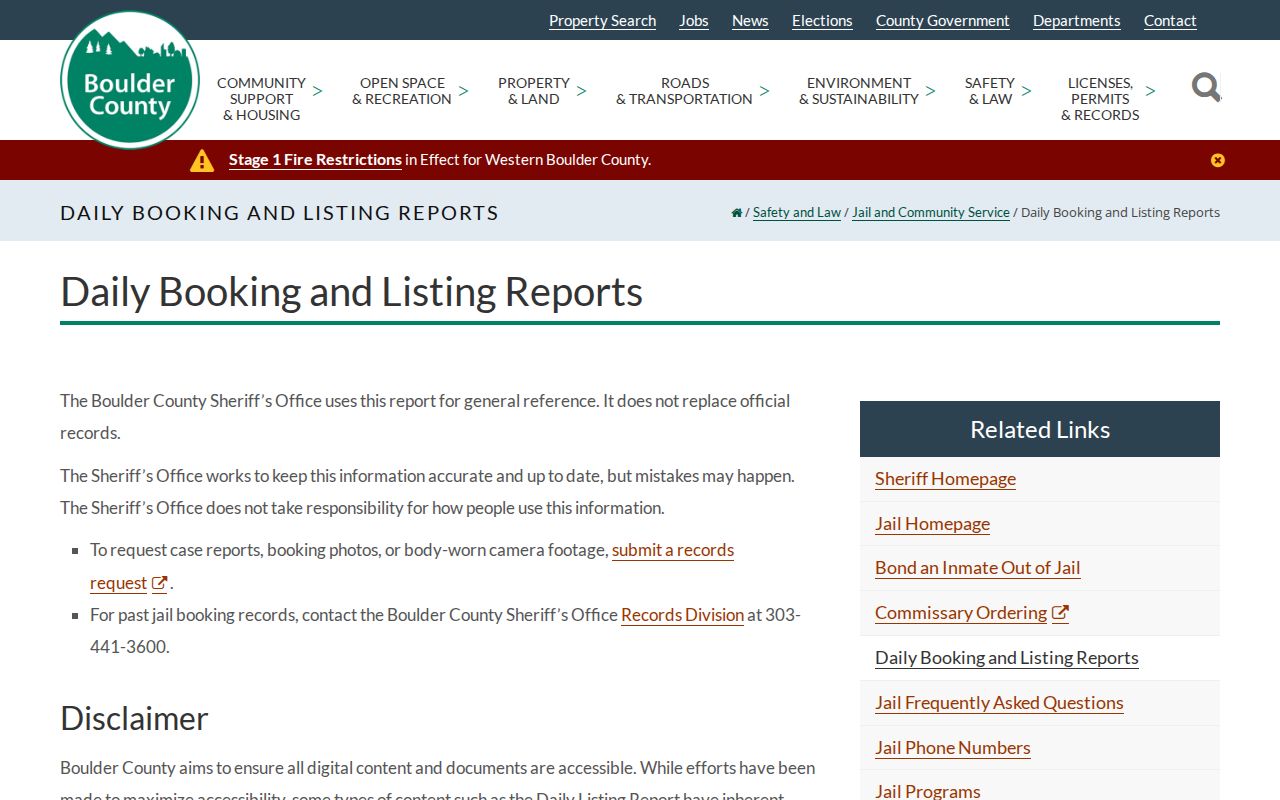
A text-only roster view can still answer the basics, like dates and custody status. For a releasable photograph, file a separate CCJRA request.
When Colorado Arrest Feeds Update
County feeds differ. Even two counties saying "daily" may not match. Weld's Daily Arrests reaches back to February 14, 2006, and stops at the previous day. Its separate release search follows release dates. Mesa's booking summary covers the prior 24 hours. San Miguel refreshes its current lists on weekdays and adds weekly booking summaries. Teller splits active custody from two rolling 72-hour views. Archuleta posts a rolling weekly intake report. Boulder provides daily booking and release reports plus a current-inmate view.
A weekend arrest can land in a later report. Someone out on bond may still sit in an intake PDF. Neither feed shows when an agency destroys or transfers a record. So ask which event a feed tracks and which time slice it covers. "Is there a feed?" is the lesser question.
Photo policies vary just as much. Archuleta, Bent, Jefferson, Teller, and Fremont offer photo-bearing or photo-linked products. Boulder, Broomfield, Gunnison, Mesa, Pueblo, San Miguel, and Weld publish custody or arrest text with no public photos. Many counties post no online name search at all. Front Range counties favor portals, though a portal does not promise a photo. Rural and mountain counties may rely on phone checks or VINE. Some use a contract jail or a weekly report.
Colorado law does not require every sheriff to build the same website. A source list points to a likely official path. It cannot promise a name appears in a public result.
Colorado Court and Federal Records
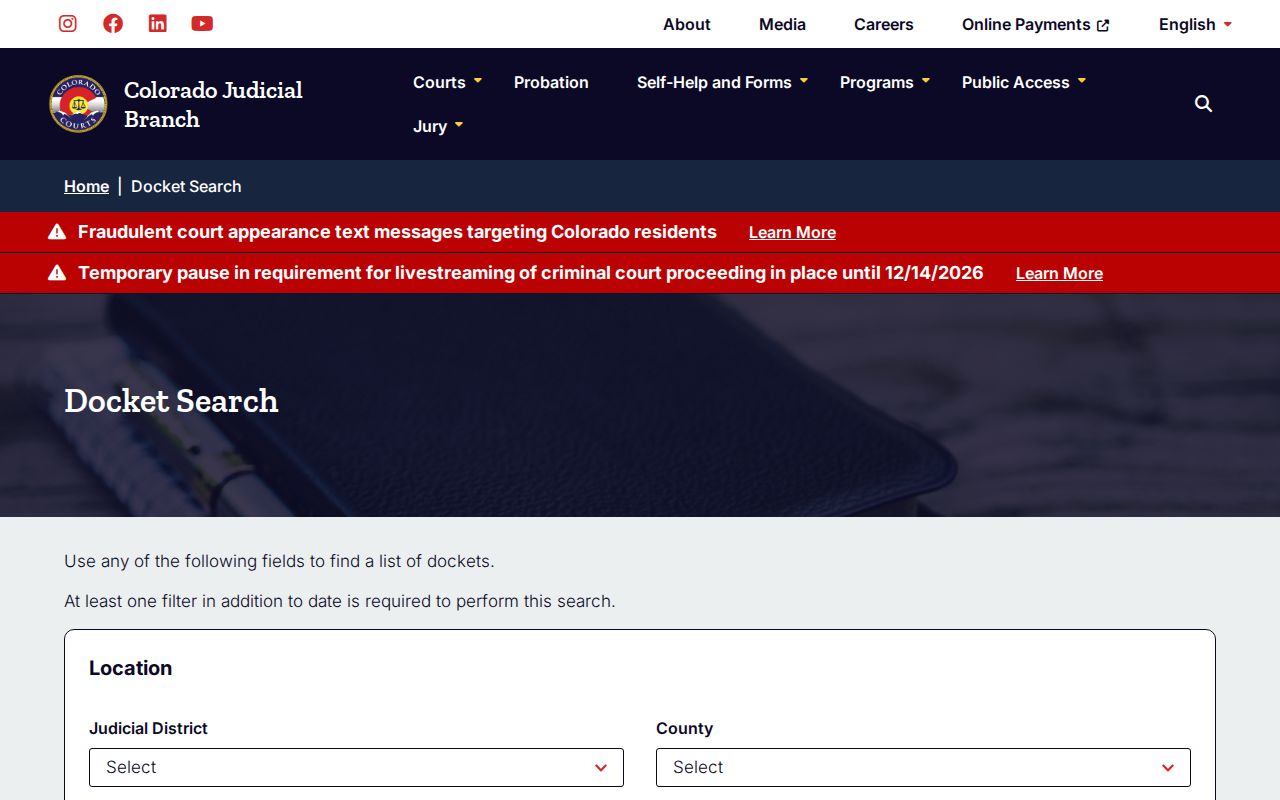
The Colorado Judicial Branch Docket Search is the statewide hub for hearings and case events. Narrow results by judicial district, county, courthouse, court type, date range, case number, party name, or attorney. At least one filter and a date range are required. A docket can list an arraignment, plea, hearing, sentencing, or disposition event. Free does not mean complete. Copies of a judgment or disposition may still have to come from the court holding the case.
The Access Guide to Public Records spells out the process for obtaining full court records. A vendor's limited register view is not the official judgment. Match the case number first. Then read the disposition or order itself.
Federal custody calls for different tools. The Bureau of Prisons Inmate Locator takes a register number or other identifiers. It returns custody fields, not a public mugshot. A pretrial person held by the U.S. Marshals or in contract custody may not appear there. Immigration custody works differently. The ICE Online Detainee Locator takes an A-number and country of birth, or an exact name and country of birth. ICE custody is civil detention, not a state criminal conviction.
Custody can move. A case may pass from a county jail to U.S. Marshals custody, then on to BOP or ICE. No single locator maps the whole chain. The BOP screen shows custody facts, not photos.
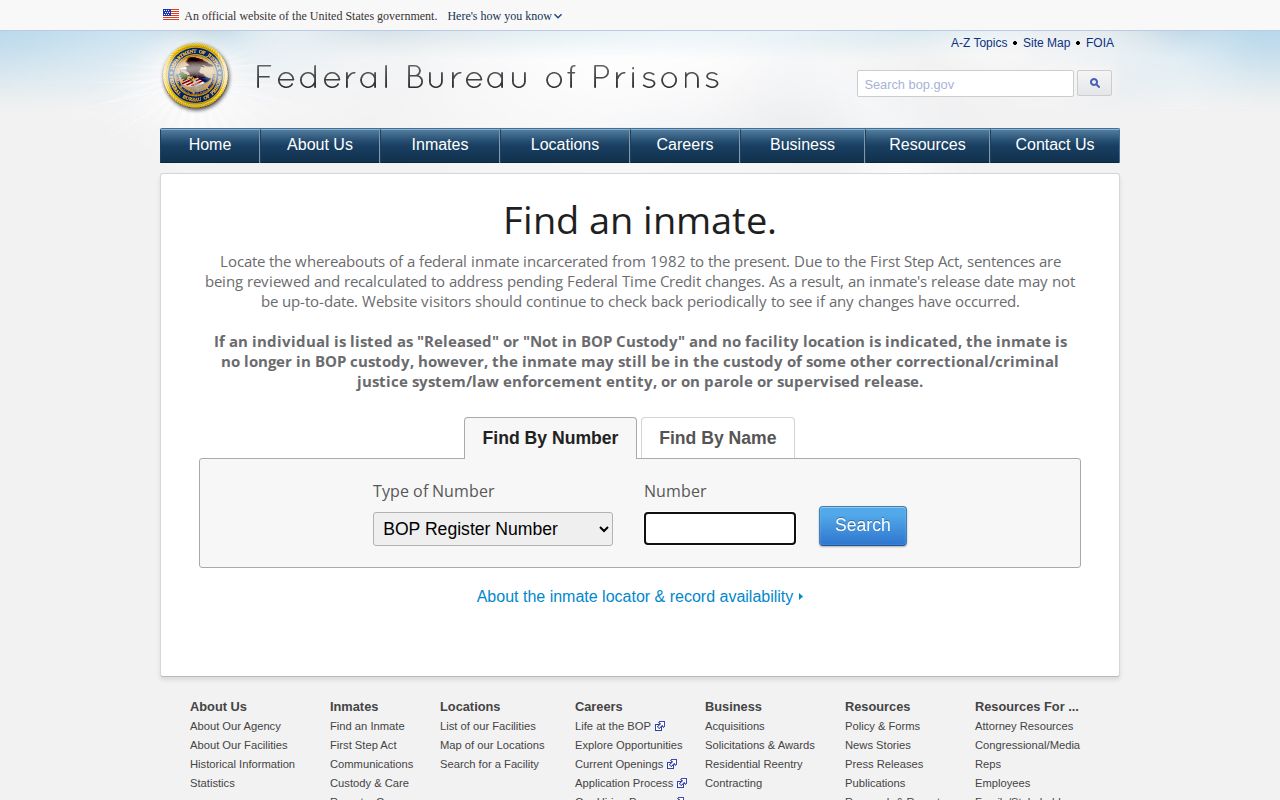
Use the right locator for the custody type. Court outcomes come from the docket. The Colorado Judicial interface stands apart from the jail roster. It can link a booking to the case record.
Write down the court and case number. If the online result stops short of the full disposition, request the final order from that court.
Colorado DOC Offender Photos
The Colorado Department of Corrections goes by CDOC. Its Offender Search lives at doc.state.co.us/oss. A result can show a profile photo, name, corrections number, physical descriptors, conviction information, and parole, release, or discharge dates where applicable. Keep the scope in mind. CDOC covers people held in state corrections data. It is not a statewide arrest feed and not a county booking-photo database.
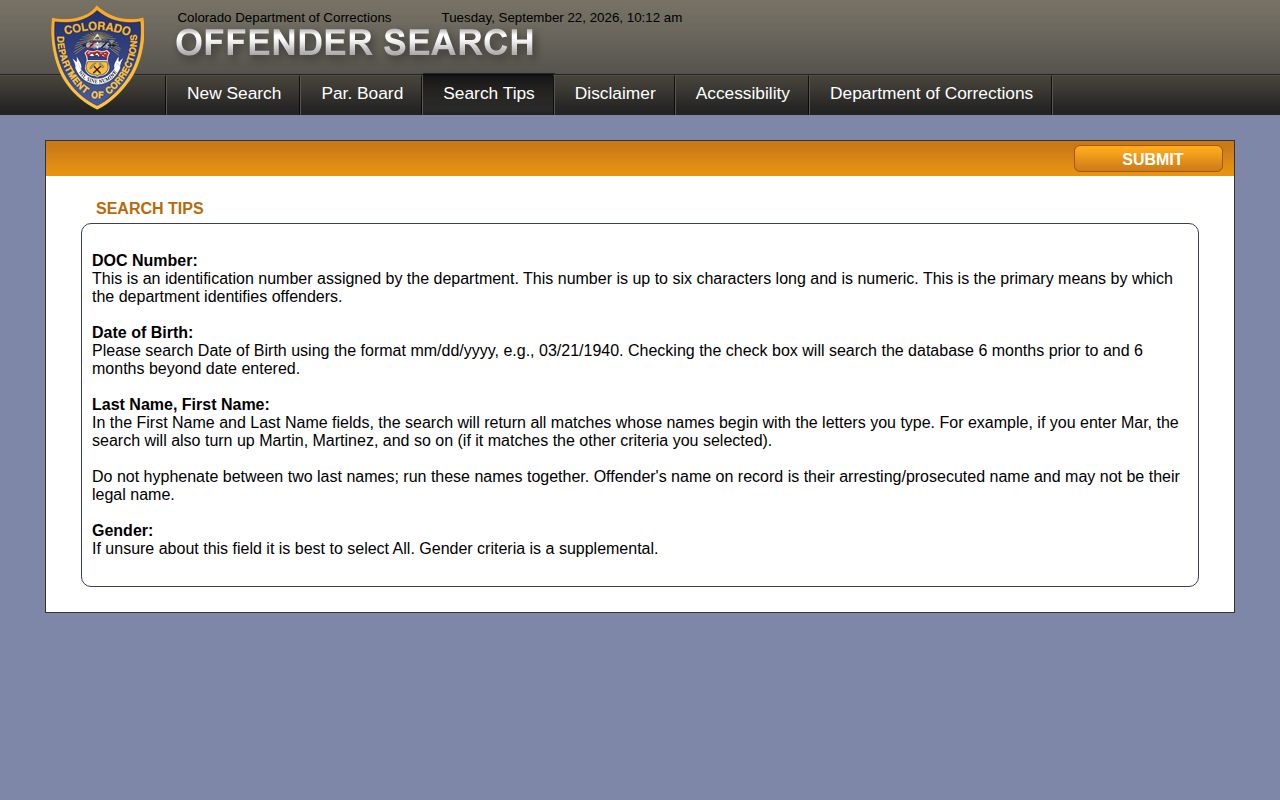
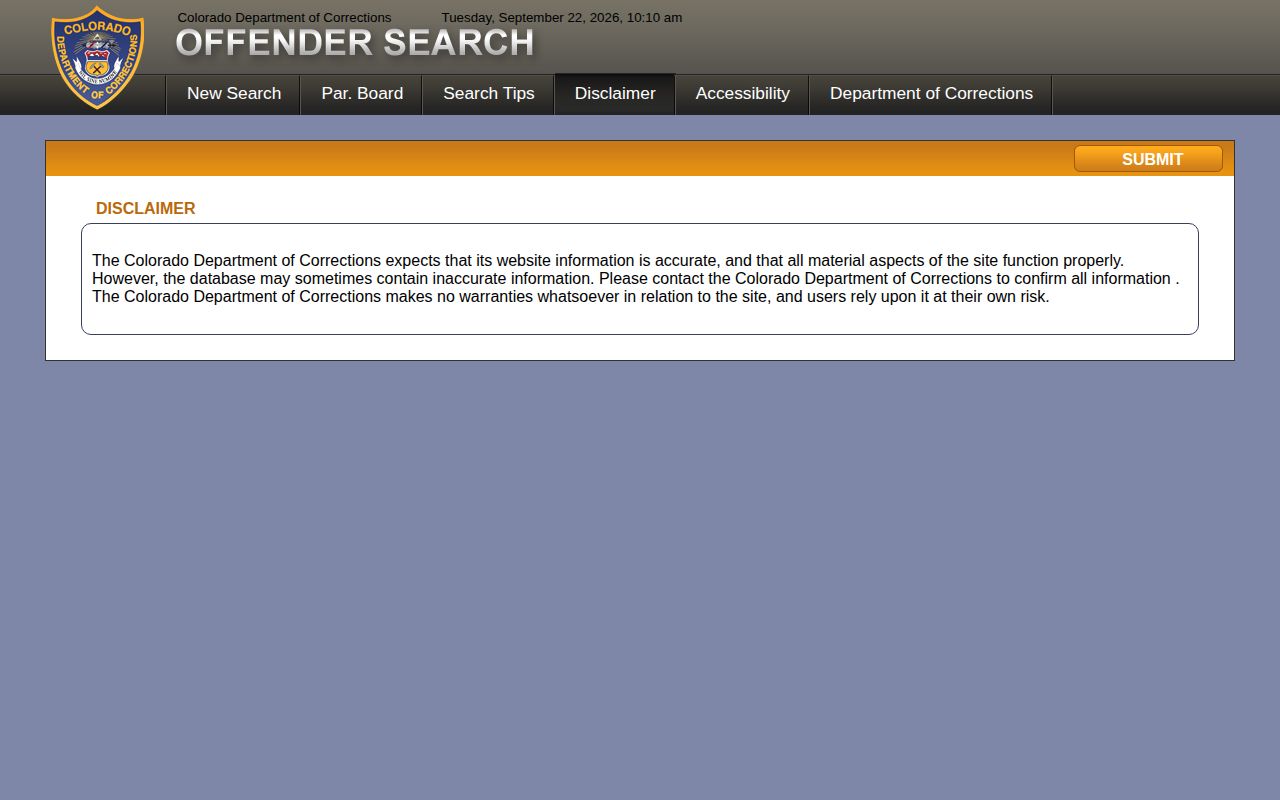
Searching works best with a DOC number. Without one, enter a last name, a first name, or both, and treat gender as a supporting filter only. The live form runs on a CAPTCHA. The posted search tips mention a date-of-birth window. The form itself may not display that control. Confirm what the current form offers before relying on it. CDOC also cautions that its records can be inaccurate and asks users to contact the department to confirm anything. A missing profile does not mean a court sealed the case.
For the full field list and the limits on corrections photos, see the CDOC mugshots and offender-search page. An arrest that came before state commitment is a different trail. That trail leads back to the county that did the booking and the court that handled the case.
The official CDOC search screen displays its own name and DOC-number controls. Open a result from there. It beats guessing at identity from a copied image.
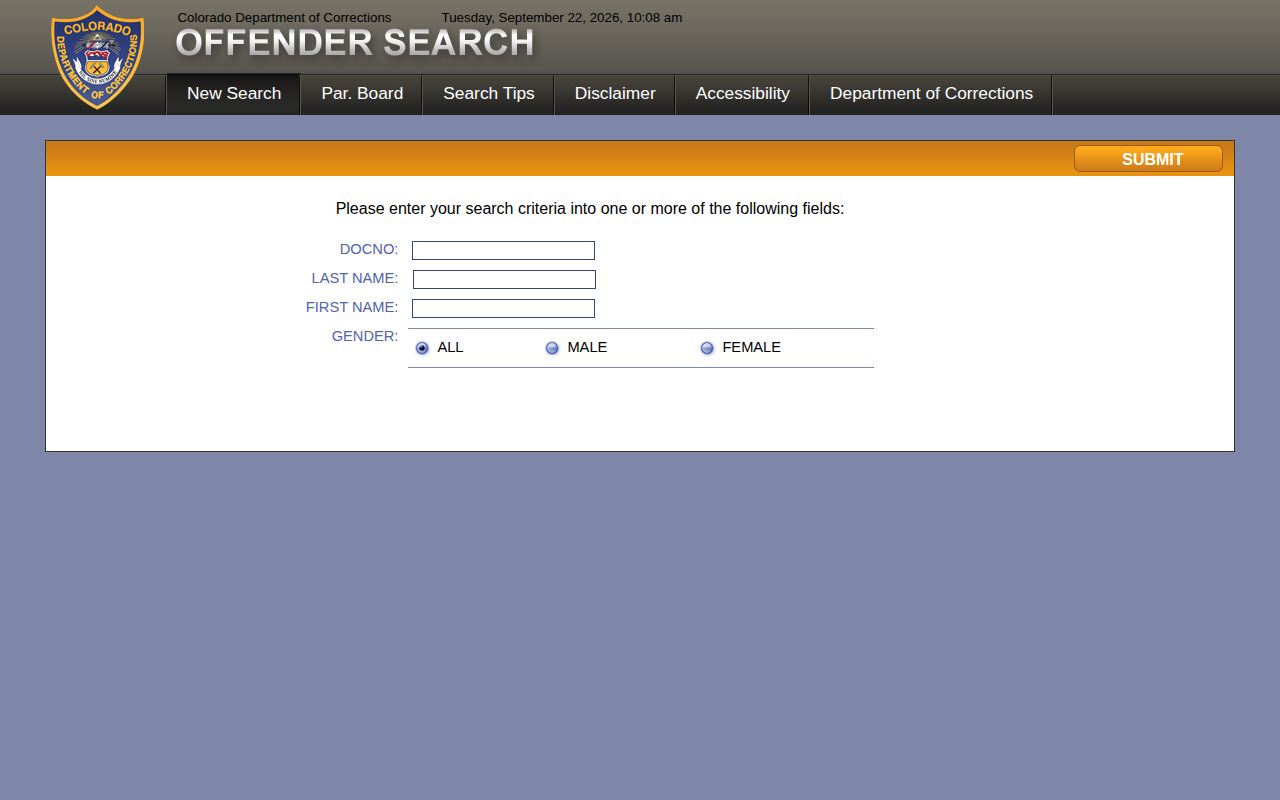
CDOC’s search form comes with its own disclaimer, and it is not a substitute for a county booking lookup. The tips page explains the number and name fields. It also covers name variants that can change whether a search matches.
A corrections number is the fastest route when you have one. If spelling or status looks off, confirm the profile with the agency. CDOC itself warns that a live profile should be checked before any record is treated as current.
A profile is one agency record at one point in time. For case events and disposition, the court docket remains the source.
Colorado Wanted Lists and Warrant Checks
Colorado keeps several public wanted and fugitive lists. The Colorado Bureau of Investigation posts a Most Wanted Sex Offenders list. CDOC posts parole absconder notices. The U.S. Marshals Service may publish Colorado-connected profiles through its district or national fugitive pages. They are alerts, not booking feeds. They also are not a complete warrant list. An entry can be dated, withdrawn, or out of date.
To check a specific warrant, start with the court and county tied to the case. Search the Colorado Judicial Branch docket for case events. Then contact the court clerk or the issuing law-enforcement agency to confirm whether a warrant is still active. A public docket may not show complete warrant status. Never approach a listed person. Someone who needs to resolve a possible warrant has a safer path. Ask a lawyer or the court for safe instructions. The Colorado Most Wanted page covers the official lists, tip routes, and the check path.
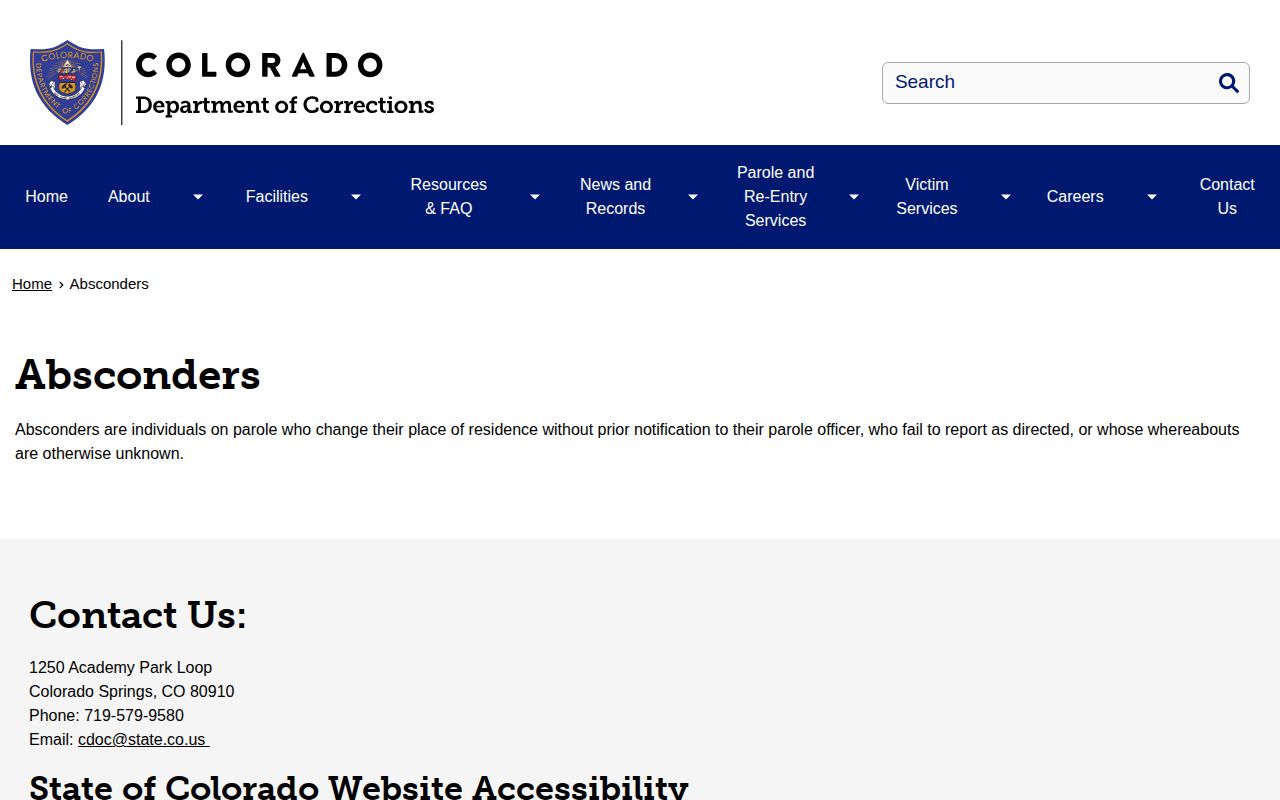
CDOC defines an absconder as a parolee whose whereabouts are unknown. This follows a reporting or residence issue. That is a supervision status, not a new arrest finding. The photo and contact details stay on CDOC’s own page. A supervision notice is simply different from a county booking event.
Send information only through the official tip channel. Never contact or follow anyone named in a notice.
Colorado Custody Alerts and Apps
Mobile tools do very different jobs. Adams County’s Sheriff app links to inmate and warrant resources, office news, SOTAR, and alerts. It is not an independent photo database. Kit Carson County points to MobilePatrol for a custody lookup. That third-party app is not a sheriff-hosted roster. Other county tools include VINE, Nixle, Everbridge, CodeRED, AlertSense, HomeWAV, Securus, and GettingOut for alerts, custody notices, jail communication, or visitation. None should be called a mugshot app unless the official source says it publishes photos.
VINE handles custody and release notifications. An emergency alert app shares public-safety notices. A jail communication vendor supports contact or visitation. Not all of these services publish booking images. For a custody change, use the notification system the county identifies; for a record, ask the custodian.
A photo-bearing roster can also be a poor fit once a person has been released. Before subscribing or sharing an alert, check whether the source tracks current custody, recent intake, or release activity.
Unofficial Colorado Mugshot Sources
Start with official county, court, and corrections sources. The third-party sites below are not government records systems. They can copy public data, miss counties, show stale images, or leave out later court outcomes. Treat them as a map of the online landscape. Verify every detail with the source agency or court.
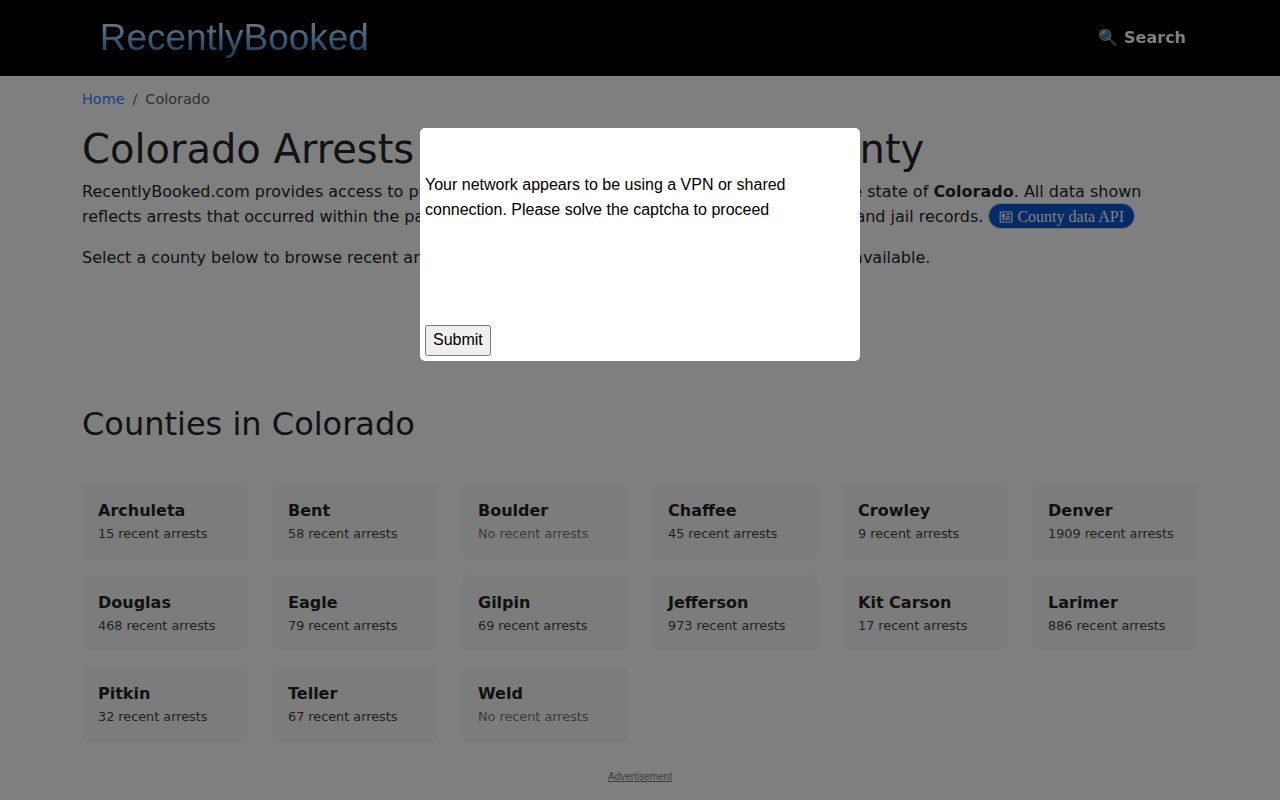
Busted Newspaper’s Colorado section offers county navigation, but coverage depends on what it ingests. Its correction form accepts documentation for dismissed, sealed, expunged, or not-guilty outcomes. There is no fixed removal deadline. RecentlyBooked’s Colorado pages describe a past-30-days view. Its policy says correction or removal requests are free with eligible documentation. A county page’s presence does not prove it lists every booking. That date range is no guarantee of statewide completeness.
Mugshots.com’s Colorado index links counties but is neither official nor complete. Its published policy describes free requests with court documentation for certain sealing, expungement, and favorable dispositions. Arrests.org’s Colorado interface offers filters. Yet it covers only a subset of counties and lists no current free removal policy. Mugshots.zone shows no Colorado index, and its form terms remain unconfirmed.
Regional outlets publish selected arrest stories. Denver7, CBS Colorado, Colorado Public Radio, KOAA, 9NEWS, FOX31, The Denver Post, The Gazette, and local papers fit that mold, often with agency photos. They are not statewide rosters. Ask the outlet to correct an article when the disposition changes, and correct the government record separately. Both the source list and any publisher request policy can change.
Use these sites only to spot a possible source. Then check the county agency and court for the official record.
Colorado Mugshots by County
Colorado sets the legal rules, but each county keeps its own booking records. Start with the county that actually took the person into custody. Then figure out who holds the file. A city police department, the sheriff, or a contract jail may control it. The County Directory links to all 64 county sites and lists every county seat. Seats help you find the right locality. They do not guarantee that every city arrest is booked there.
There is no single statewide feed. Some counties run a search portal. Some post a PDF or a brief intake report. Others publish no online roster at all. Arrests near a county line deserve extra care. Confirm the booking agency before mailing a request. A city name alone can send you to the wrong jail.
Older Colorado records work differently. The Colorado archives page sorts agency retention from historical collections. For notable cases, trust the arresting agency and the court docket. A copied news image is not the source.